

Quick Answer
- A laptop technician finds and fixes laptop faults: screens, keyboards, batteries, charging, storage, BIOS, operating systems and, at a higher level, the motherboard.
- Learn in this order: basic electronics and workshop safety, laptop parts and safe disassembly, fault diagnosis, part replacement, software repair, then motherboard testing and soldering.
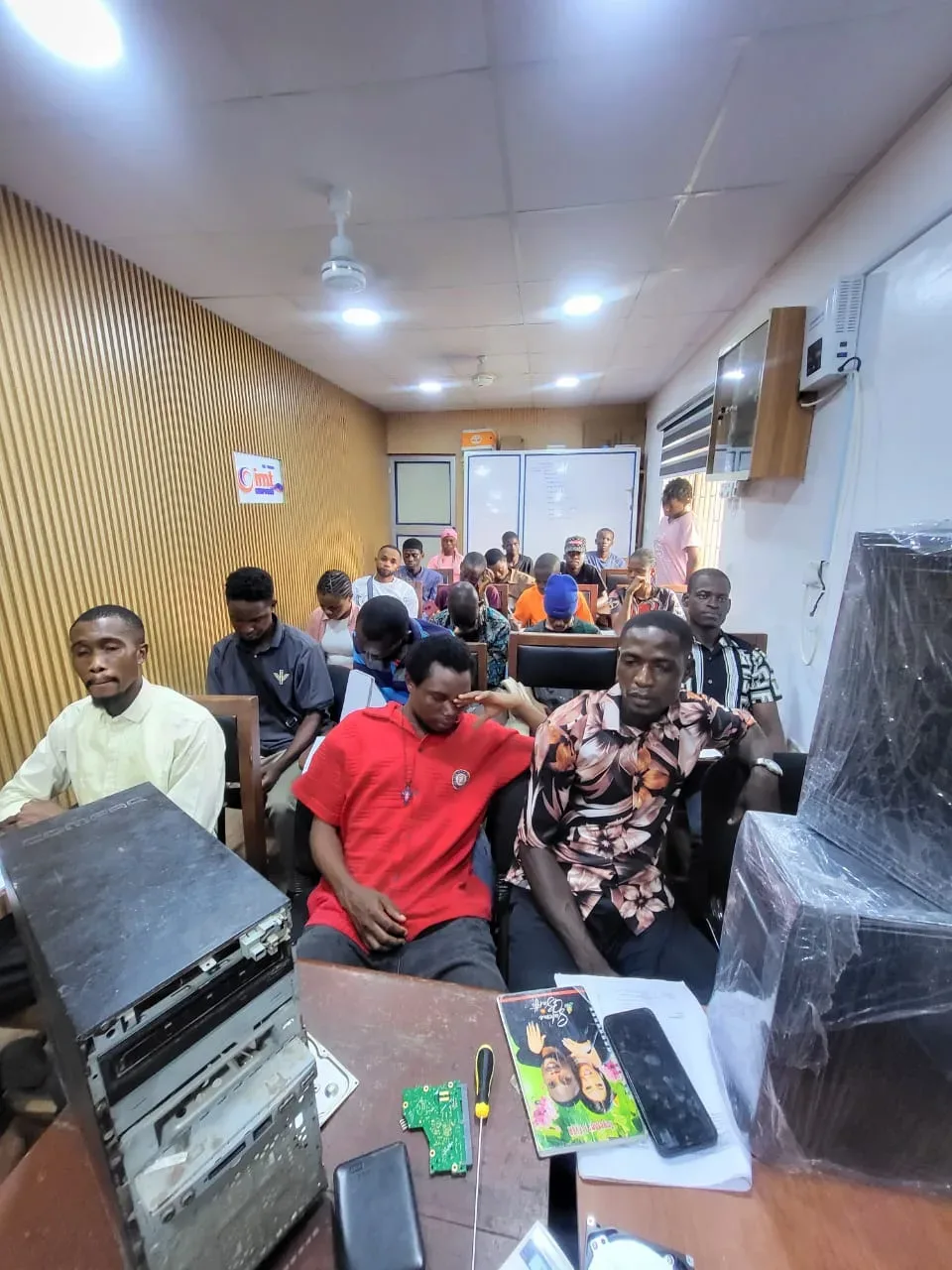
- IMT Computers teaches this path in a 12-week, hands-on course in Ikeja, Lagos.
To become a laptop technician in Nigeria, learn to diagnose before you replace anything: start with basic electronics and safe disassembly, practise on real faulty laptops, then add software repair and soldering. You do not need a degree to learn these skills. Customers pay for one result, a laptop that works again, and that comes from practice on real machines.
What does a laptop technician do?
A laptop technician finds the cause of a fault and fixes it. Day to day that includes:
Replacing cracked screens, worn keyboards, dead batteries and broken DC jacks (the charging socket)
Upgrading or replacing RAM, and swapping a hard drive for an SSD
Cleaning the cooling system and fan when a laptop overheats or shuts down
Installing operating systems and drivers, and removing viruses and malware
Diagnosing laptops that will not power on or show a picture
At a higher level, testing the motherboard and replacing faulty components by soldering
The skills to learn, in the order that works
Each step makes the next one easier. Skipping the first two is the most common reason beginners end up replacing parts that were never faulty.
1. Basic electricity and electronics
Voltage, current, resistance and Ohm's law, and how to measure them with a multimeter. Charging, power and display faults are electrical faults in the end, so if you can measure, you can diagnose instead of guessing.
2. Laptop parts and safe disassembly
Learn what the motherboard, RAM, storage, battery, cooling system, display and keyboard do, and how to open a laptop without breaking clips or cables. Use anti-static protection, and keep screws sorted by where they came from.
3. Fault diagnosis by symptom
Work from the cheapest, fastest checks to the deepest: is the adapter good, is the battery the problem, does reseating the RAM bring it back, does an external monitor show a picture? Dead, no-display, freezing, overheating and not-charging laptops each have their own order of checks. For one example, see laptop not charging: causes and how technicians find the fault.
4. Replacing parts
Screens, keyboards, batteries, DC jacks, RAM and drives are the everyday jobs. Practise on real machines: each model opens a little differently.
5. Software and BIOS
Install Windows, drivers and applications, fix boot problems, change BIOS settings and remove malware. A surprising number of "hardware" complaints turn out to be software.
6. Motherboard basics and soldering
Learn to identify the sections of a motherboard and the common components on it, test them with a multimeter, and practise soldering and desoldering on scrap boards before you touch a customer's laptop.
7. Customer handling and records
Write down the fault, your diagnosis and the repair, test the laptop before you hand it back, and explain what you did in plain language. It is what turns one repair into the next customer.
Tools you need to start
A precision screwdriver set with the bits laptops use
Plastic opening tools (spudgers), so you do not gouge the casing
An anti-static wrist strap or mat
A digital multimeter
Isopropyl alcohol, a soft brush and compressed air for cleaning
Thermal paste, for when you clean and refit a cooling system
A USB drive with operating system installers and drivers
Add a soldering iron and, later, a hot-air station when you start board-level work. Do not spend on soldering equipment before you can diagnose reliably.
How long does it take to learn?
There is no honest single number. Basic part replacement can be learned in weeks, but confident diagnosis comes from the number of different faulty laptops you have worked on. A structured course shortens the path: the Laptop Technician Repair course at IMT Computers runs for 12 weeks, from basic electricity to a final practical examination in which you diagnose a faulty laptop, repair it, test it and document the repair.
Learn on your own or take a course?
You can learn part swaps from videos. What videos cannot give you is a faulty machine with a fault you have not seen before, someone to check your diagnosis, and soldering practice with feedback. A good course gives you structure, practice units, assessment and a certificate you can show. Before you pay anyone, read how to choose a phone and laptop repair school in Lagos.
From technician to specialist
Once you repair laptops confidently, the next step is usually the motherboard: chip-level laptop repair means repairing the board itself instead of replacing it. Others specialise in MacBook repair or add phone repair. If you are unsure where to begin, read phone repair or laptop repair: which should you learn first?
Frequently Asked Questions
Do I need a degree to become a laptop technician?
No degree is needed to learn the work. What counts is practical ability, and a certificate that anyone can check helps show that you completed training.
How much does laptop repair training cost in Lagos?
Fees differ between schools and between intakes. IMT Computers does not publish a flat rate: register and the admissions team will confirm your fee within 24 hours. Whichever school you choose, ask what the fee includes.
Can I learn laptop repair online?
You can learn theory online, but diagnosis and soldering need physical machines and tools. IMT Computers' repair courses are taught hands-on in a workshop in Ikeja, Lagos.
Should I learn laptop repair or phone repair first?
It depends on what you want to repair. Our guide phone repair or laptop repair: which should you learn first? explains how to choose.
Ready to start? See the Laptop Technician Repair course (12 weeks, Mondays and Wednesdays, 10am to 1pm) or compare all four courses on Laptop & Phone Repair Training.
Related articles
- Phone Repair or Laptop Repair: Which Should You Learn First? Career Tips · October 13, 2026
- How to Choose a Phone and Laptop Repair Training School in Lagos: 8 Things to Check Career Tips · October 13, 2026
- How to Become a Phone Repair Technician in Nigeria: What to Learn and in What Order Career Tips · October 13, 2026
- What Is Chip-Level (Board-Level) Laptop Repair? Skills, Tools and Training Industry Insights · October 13, 2026