

This guide is part of our FOA Certification training.
Quick Answer
- Fiber optics training is only as good as the lab behind it, ask specifically what equipment students actually get hands-on time with, not just what's shown in photos.
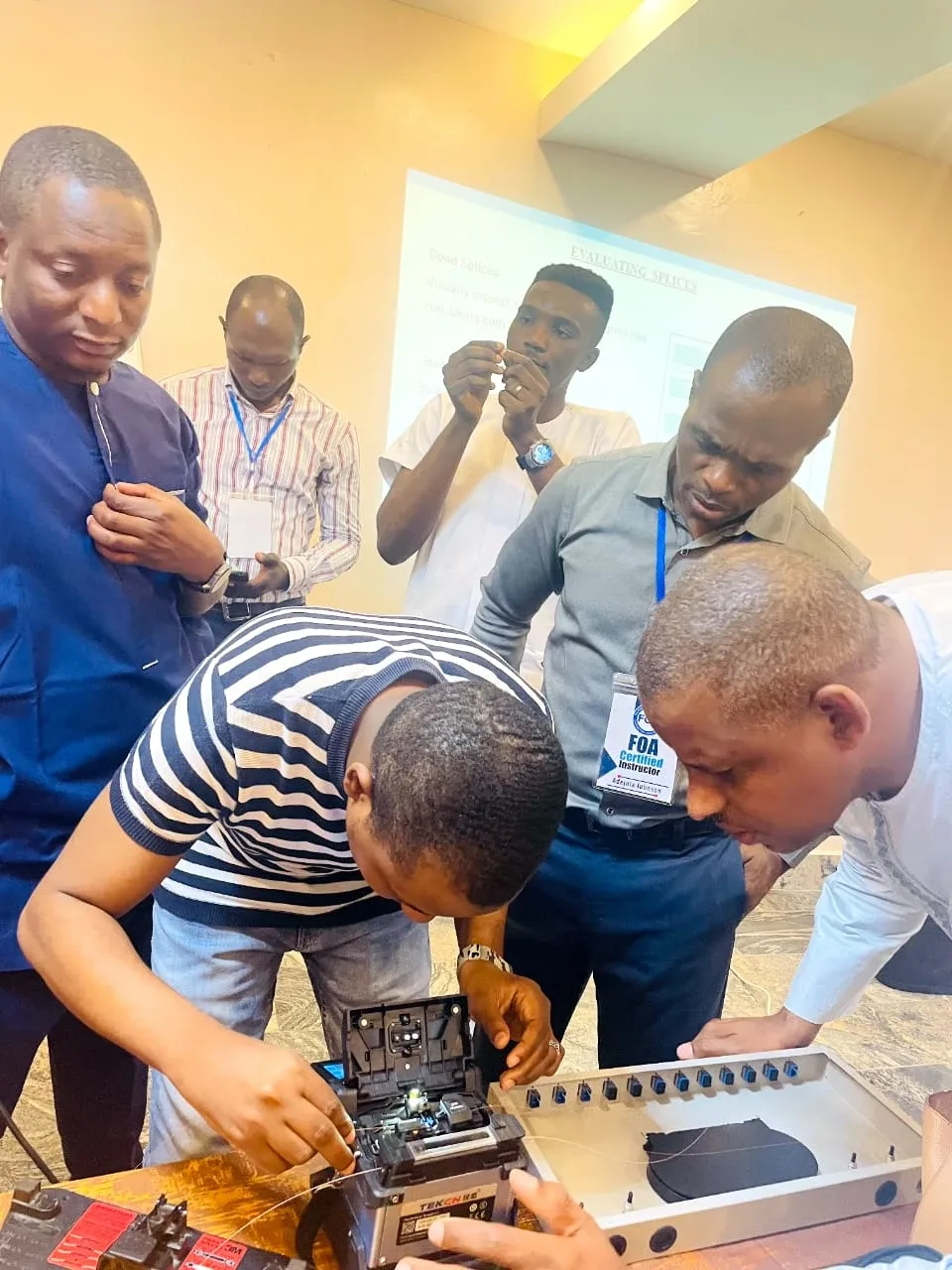
- Our Ikeja training lab is fully equipped for practical FOA training and exams, with industry-standard splicing and OTDR equipment, not shared or borrowed gear.
FOA certification is a practical, hands-on standard — an exam candidate has to demonstrate real skills on real equipment, not answer questions about theory alone. That means the lab a training centre trains and examines you in matters as much as its accreditation does.
What FOA-Standard Practical Training Requires
Our Ikeja facility is equipped for the full range of hands-on work each FOA certification track requires:
Fusion splicing equipment for permanent, low-loss fiber joins
OTDR (Optical Time-Domain Reflectometer) units for fault-finding and link testing
Optical power meters and light sources for loss measurement
Visual fault locators for quick break and connector checks
A range of single-mode and multimode cable, connectors and termination kits for hands-on practice
Candidates train and are examined on the same equipment used in the field — not a simplified classroom substitute.
See the Lab for Yourself
[Photos of our Ikeja training lab and equipment go here — to be added once supplied.]
Training and exams here are led by our FOA Certified Fiber Optic Instructor, whose credentials you can verify independently before enrolling.
Check his verified certifications on our Instructor Certifications page, or
browse our FOA Certification courses to see what you'll train on.
Related articles
- IMT Computers Expands FOA Fiber Optics Training Programs Company News · October 10, 2025
- What Is FOA? The Fiber Optic Association Explained Industry Insights · July 21, 2026
- What Makes an FOA Accredited Center Stand Out Globally — And Where IMT Computers Fits In Company News · August 1, 2026
- Why IMT Computers Is Among Africa's Leading FOA Accredited Training Centers Company News · July 31, 2026